The business model belongs to you.
Readable Java in your repository—not metadata imprisoned in a vendor’s designer.
Stop bending the operation around somebody else’s SaaS. Model it in plain Java and ship a system your team actually owns.
Most platforms make the same promise: configure our product until it almost resembles your company. We built onno because “almost” is where expensive workarounds, shadow spreadsheets and permanent consultants live.
Readable Java in your repository—not metadata imprisoned in a vendor’s designer.
If a workflow makes the company different, it should be testable, reviewable and versioned.
Agents get typed business tools and the application’s permissions—not a chatbot pasted over disconnected data.
The domain model stays explicit, readable and compiler-checked. onno turns it into the infrastructure every business system needs.
Catalogs, documents, line items, balances and rules represented directly in Java.
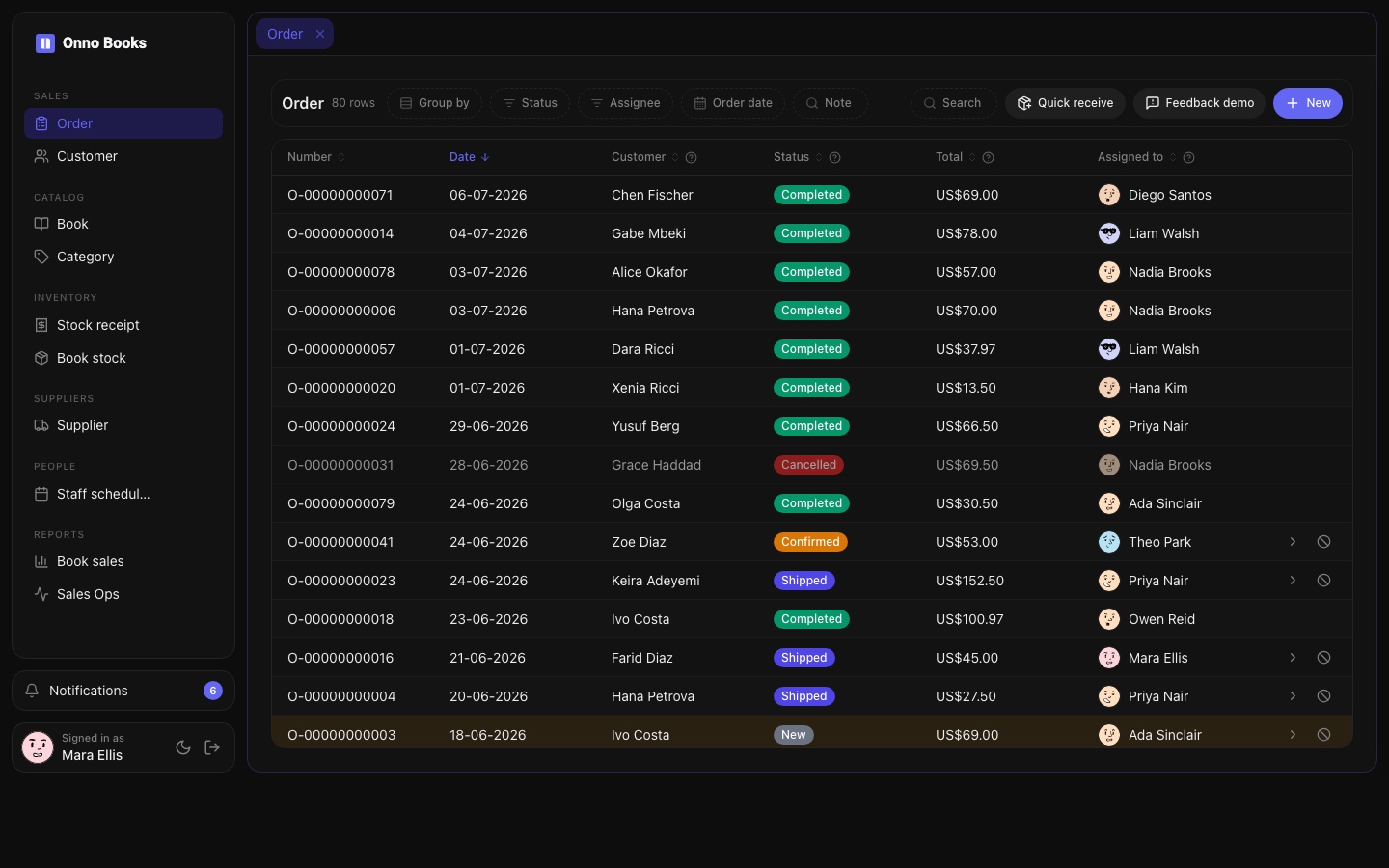
Role-aware lists, forms, dashboards and actions generated from the same model.
Schema, repositories, queries, REST endpoints and safe migrations without duplicate definitions.
Validation, posting, lifecycle hooks and integrations remain ordinary testable code.
MCP tools expose business concepts to agents with the same authorization as the application.
Extend the system as operations change instead of replacing another rigid platform.
Name the customers, orders, stock, payments, events and rules the company actually works with.
onno creates the database layer, APIs, role-aware interface and AI-accessible tool surface.
Keep integrations, posting logic and competitive workflows in plain, compiler-checked Java.
We start where generic tools give up: the awkward, company-specific workflow held together by spreadsheets and human memory.
The one held together by spreadsheets, chat messages and the employee who “just knows.” That is where we start.